by Cuckoo Forest | Mar 6, 2018 | Blog
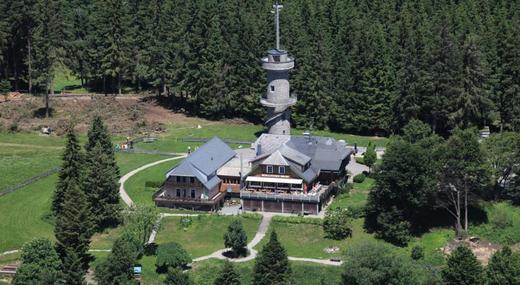
Have you ever wanted to visit the site that inspired the Brothers Grimm fairy tales?
I know I have and they say that place is none other none other than the Black Forest.
It sounds like something out of an episode of Once doesn’t it?
Well, the name was enough to captivate me.
So I looked more into Germany. It was just so beautiful to see enchanting fairytale forests, coo-coo clocks, and castles upon beautiful hills.
What kid wouldn’t want to pay a visit to fairy tale forests and beautiful hills?
Who wouldn’t want to be able to see stunning handcrafted cuckoo clocks?
I know my kids would.
So how could you get to the Black Forest on a budget?
Well, it is important to know that the off-season in Germany is from November – March. Therefore, flying into Germany will be cheaper during these months. If you do opt to fly then I would suggest that you fly into London, and then from there, you can take one of the many European air carriers such as Ryanair or Flybe. Unless you would rather explore a bit and if this were the case than you could simply take a train to Germany. If you would rather fly in directly to Germany then I would suggest that you go to Frankfurt or Berlin since they are also typically less expensive to fly into from the US than other German cities.
Where to stay?
To be honest with you Black Forest Germany is very budget friendly when it comes to hotels. They have several hotels at very reasonable prices. Below are a few of the ones that stood out to me.

Berggasthof & Hotel Brend prices start at $60 a night

Hotel a der Sonne prices start at $55
However, if these options are a bit more than you are willing to spend for a place to stay you can find cheaper accommodations. They are known as hostel dorm rooms.
Have you ever heard of these?
I had not until now but they are available for 10-30 EUR per night. Not bad for anyone who is trying to save a few bucks.
Transportation
Europe is well-known as a budget travel destination. It is also known for its ease of transportation once you are there. I would suggest that you try regional trains or buses because they are very affordable especially if you purchase a daily or weekly city transportation card. These are great ways to see the sights. You can also rent a bike if you would like this is a great option for anyone who is wanting to enjoy the breeze.
Food
Now, trying new foods is something that everyone wants to do when they are traveling. The best way to save money and experience all there is to try is to eat your meals from the street vendors can offer the best budget meal for under 5 EUR. When in the Black Forest you must try the Black Forest Cake. It is amazingly sweet! It is also a good idea to try some other traditional German specialties like Bratwurst, Kartoffelsalat or Currywurst are delicious ways to experience local culture and only cost around 3-5 EUR.
What to do when in the Black Forest?
Now any traveler can tell you that activities and attractions are usually what they spend the most money on. However, there are good deals out there what you need to take advantage of such as guided tours or riverboat cruises. These are a great way to spend some time as well a good budget activity. They will cost about 25 EUR, however, some do run more.
- Exploring on your own is a great way to give you an idea of the main sights you want to go back to. I might also suggest that you check out any museums in a city that interest you. Most of the times they have a certain day of the week or time period where they offer free admission. This would be a plus for you.
- Hiking is a great way to explore the enchanting outdoor region, like the Black Forest or Berchtesgaden National Park. Spending an afternoon having a picnic and hiking in one of the many beautiful Germany’s parks is a great way to have fun and save money.
There are many ways to enjoy the Black Forest on a budget. Hope you don’t forget to stop by and enjoy the Coo coo clocks. They are just stunning. If you would be interested in traveling to the Black Forest look me up I can help you out ochoa.lisa@livelaughlovetravel.com.
About the author
Lisa Marie Ochoa lives in San Antonio Texas with her family. They love exploring the world around them and looking for new adventures. She is always looking for ways to save and maximize traveling. If you would like to read more about their adventures follow them on their blog www.travelingwithkidz.com Lisa is also a travel agent and can help you with setting up your next adventure email her at ochoa.lisa@livelaughlovetravel.com for your free quote today.
by Cuckoo Forest | Feb 26, 2018 | Blog
A Look at What Makes Clocks Outside of
the Black Forest Tick and What makes
the German Clocks So Special!

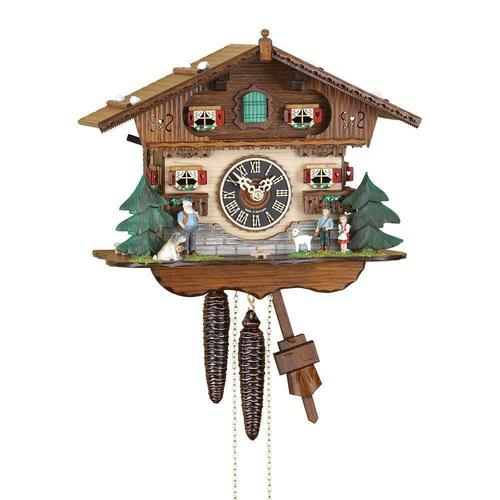
Tracing its origin back to the 18th century, cuckoo clock has been one of the most loved souvenirs for decades. History is filled with stories of how the Cuckoo clock was popularized in Germany, and its journey to the various parts of the world.
Right now, several designs attributed to different cultures from different countries have entered the souvenir market.
And one thing is for sure – not much has changed since the original traditional style
…only the material used and perhaps some little alterations.
Let’s take a look at the cuckoo clocks from
different parts of the world
1. Cuckoo clocks from Switzerland (The Swiss ‘Chalet’)
Swiss people are often known for their profound culture and their historical craftsmanship. At the end of the 19th century, Switzerland popularized its new contribution to the cuckoo clock innovation as a national relic and a cultural icon.

That’s right, a cultural icon.
The Swiss Chalet was one of a kind!
It had added features like– the resemblance to the cuckoo bird among other structural automata.
Still today,
…the people around the world identify the cuckoo clock with the Swiss.
What really makes the Swiss Chalet unique?
Obtaining their names from the kind of the traditional house used, there are three basic types of the Swiss Cuckoo clocks.
Besides the common projecting bird, the Swiss clock can take on animated figurines such as woodcutters, turning water wills, and moving beer drinkers. Other traditional cuckoo clocks can even feature a dancing figurine and a music box.
It’s no wonder “the Swiss cuckoo clocks are considered unique and of high aesthetic value than those from other countries.”
Research has shown that most tourists prefer the traditional Chalets since they signify the perfect cultural setting as well as incorporating several other aesthetic ideas.
In fact, most people from the West still think that Switzerland is the origin of the famous cuckoo clocks.
Unlike the cheap cuckoo clocks from countries like China, the Swiss Chalet is quite expensive. Obviously, quality attracts price.
Actually, it may surprise you that some Swiss chalet clocks may be a bit too expensive. While the quality is very high—keep in mind—so is the price. You can get one from Amazon or eBay.
2. Cuckoo clocks from China
China is known for its strong cultural heritage. The Chinese people take pride in the fact that they have upheld their culture through generations. In China, even in the most modern places, you can still find several unique cultural structures, buildings, and other souvenirs.

But if you think China is the best option for getting a Cuckoo clock—then keep reading.
The reason is simple – China is not the origin of the Cuckoo clocks.
Chinese are known to treat their traditions and culture with much adoration, but they are quite inflexible in adopting someone else’s.
The ideas used to make the cuckoo clocks in China are adopted from other parts of the world.
So that means, creativity and innovation are not so common in the cuckoo clock-making industry. The modesty and the traditional meaning of a cuckoo clock lose its value.
This doesn’t, however, mean that you can’t get a quality cuckoo clock in China, instead, for a typical kind, China is not the best option.
As far as prices go, Chinese Cuckoo clocks are relatively cheaper than most from the other countries.
But a cheaper price means a cheaper clock.
You will most likely find several clocks that are either plastic or less quality wood. If you need a typical and quality clock for you souvenir, other countries like Germany and Switzerland could be better options. You can, however, find the Chinese cuckoo clocks in online stores like the eBay and Alibaba.
3. The Japanese Cuckoo clocks
Japan is another cultural country with a relatively fast rate of modernization. The espousal of the modern ideas in almost all aspects of life might soon denature the firmness of the cultural traditions.

But here’s the deal with Japanese cuckoo clocks:
As with China, Japan is a secondary recipient of the cuckoo clock skills and ideas. The Japanese have primarily adopted the modern form of the Cuckoo clock.
In short, the primary idea in Japan is NOT the clock as an heirloom or a symbol of cultural heritage,
..instead,
..it is a tool that shows time and improves home decor. That is why you can find different designs based on things like trees, some animals, etc.
Consider this:
Since they are based on the modern types and ideas– Japanese cuckoo clocks are often made of wood, plastics or any other material. They are more expensive than the Chinese types—but still inferior in craftsmanship to the German and Swiss.
4. Cuckoo clocks from Korea
The Korean cuckoo clock takes different designs and styles. They take different forms such as trees, houses, birds and other figurines. They resemble the original Swiss or German cuckoo clock.
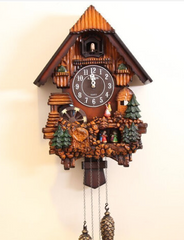
Hold on—looks aren’t everything. What’s inside counts too!
One common feature among these clocks is that they operate through quartz movement and are battery powered. German and Swiss clocks are all mechanical movement.
But the Korean clockmakers are trying to match the aesthetics. Like the European clocks, they are made from wood, Korean wood.
This is what makes them quite unique and more quality than those from China and Japan.
The typical idea of the cuckoo clock is quite preserved with the Korean clocks. The different types include the traditional cuckoo clock, the chalet, and the musical dancing dolls cuckoo clock.
Let’s look at the cost of Korean clocks:
These varieties are available at different prices. Those with more advanced features are priced higher than those that are relatively basic. These Korean cuckoo clocks can be ordered through online stores such as eBay and Amazon.
Johann Baptist Beha and the “Beha Clocks”

The Original Cuckoo Clock
Now that’s you’ve seen what other countries have to offer, let’s talk about the real deal, the original Beha cuckoo Clock.
Let’s get started.
The first cuckoo clock was made in the mid-18th-century in Germany’s Black Forest region, which is just north of Switzerland. That’s perhaps the reason why the cuckoo clock is thought to have originated in Switzerland.
By the end of the 18th-century, the craft of making the cuckoo clock had become so popular in this region that it morphed into a full-fledged industry.
Clockmakers would spend months in winter making clocks with intricate details. These would then be passed on to traders who sold them across Europe in the summertime.
With time, the first Switzerland cuckoo clock was made. That was long before the 20th-century when Swiss clockmakers thought of including a chalet music box on a cuckoo clock.
The world could not help but fall in love with this new style of clock making and its representation of the idyllic and peaceful Alpine lifestyle.
Today, the Switzerland style cuckoo clock is the most popular.
Who is Johann Baptist Beha?
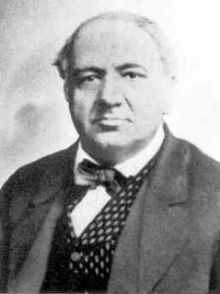
Johann Baptist Beha was born in 1815 in Eisenbach. He rose to become one of the most prestigious Black Forest clockmakers. His fast experience as a clockmaker was under the pupillage of his father Vinzenz Beha in a family-owned workshop. As a popular clockmaker, V. Beha made over 365 clocks from 1939 to 1845.
People were already in love with the older Beha’s clocks by the time Johann B. Beha was founding his own workshop in 1845. He was among the pioneers of Black Forest Horology.
Modern improvements in cuckoo clocks wouldn’t be a complete subject without mentioning his name.
As one of the best cuckoo clock makers of his time, Johann B. Baptist won several international silver and gold medals for his design prowess and craftsmanship. A case in point is the 1873 gold medal he won during the Vienna World Trade exhibition.
Previously, he had won great prizes in Paris and London. It is, however, the merit medal he won from the United States Centennial Commission during the 1876 Philadelphia clocks show. This was followed by further honors in 1877 in Karlsruhe, 1885 in London, 1877 in Freiburg, 1893 in Chicago, and 1895 in Strasbourg.
You wouldn’t find a better representation of an 18th and 19th-century Black Forest clockmaker than Johann Baptist Beha.
He was always self-educating, experimenting, and inventing.
Although he had very little theoretical knowledge, he was always looking for practical solutions.
The result is a plethora of technical miracles that remain hard to comprehend, even by today’s standards.
Beha’s Clock Making
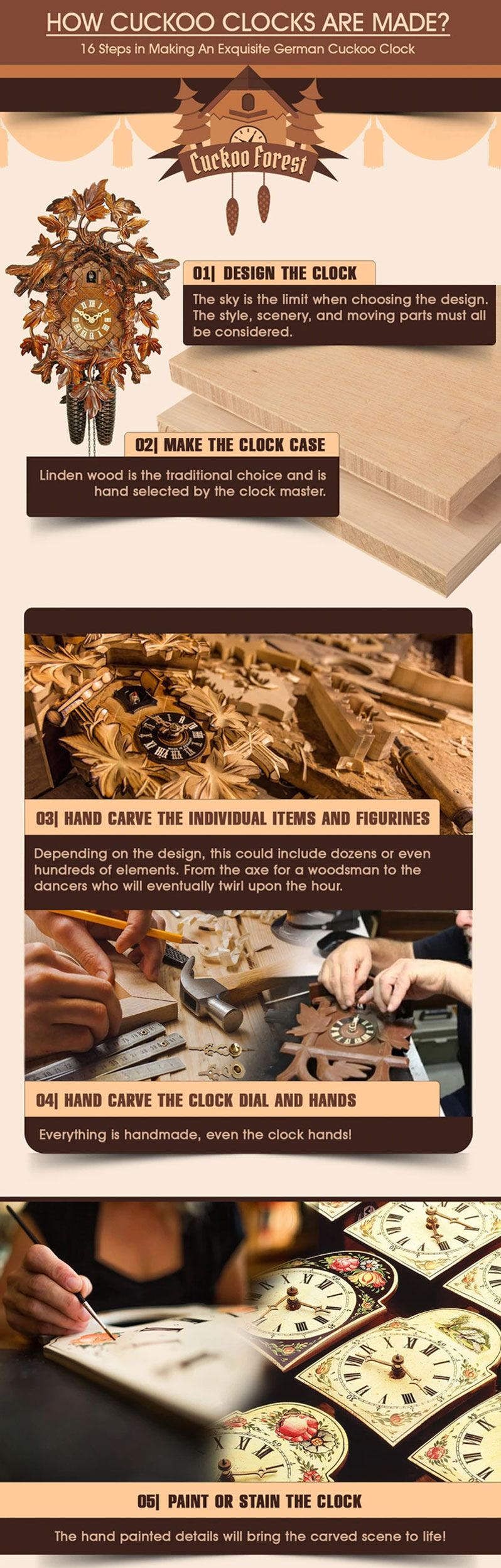
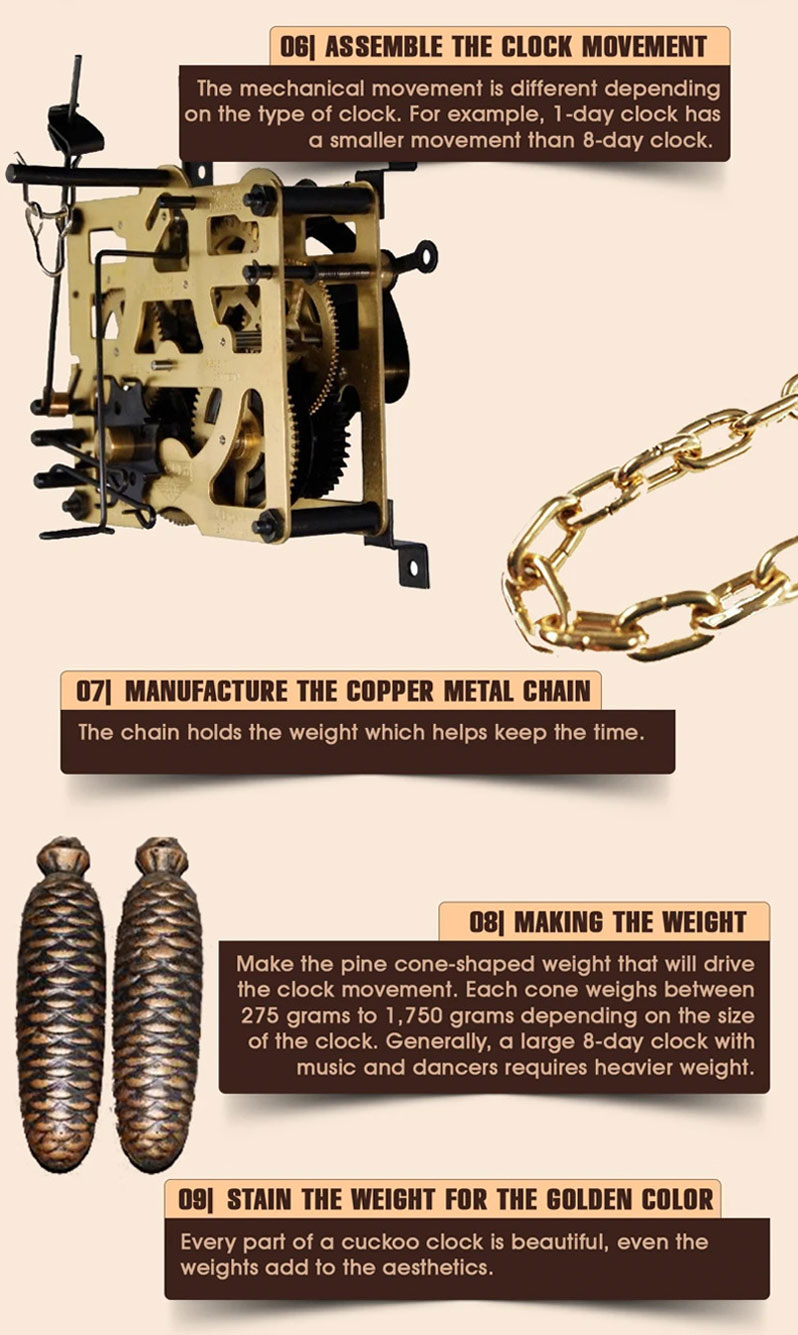
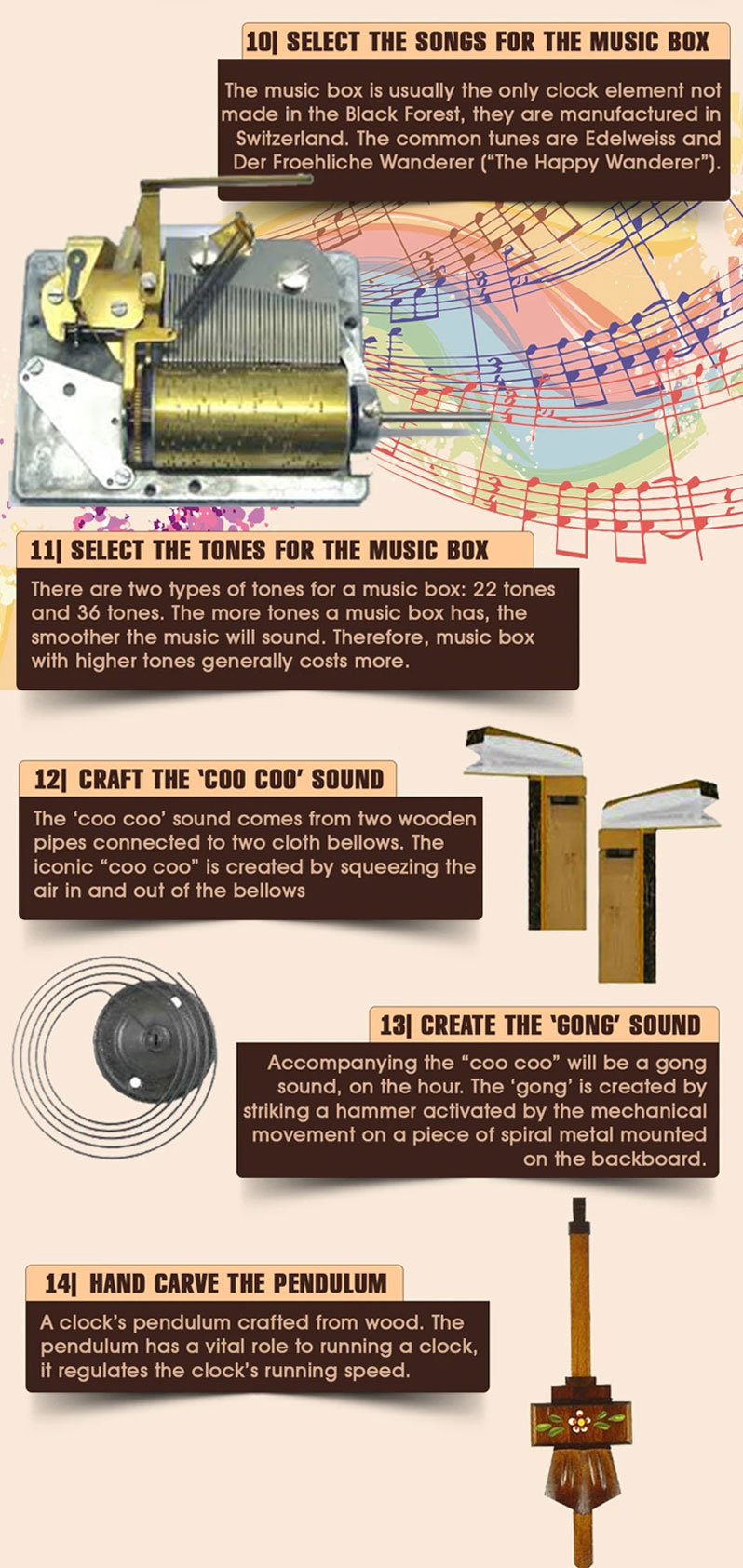
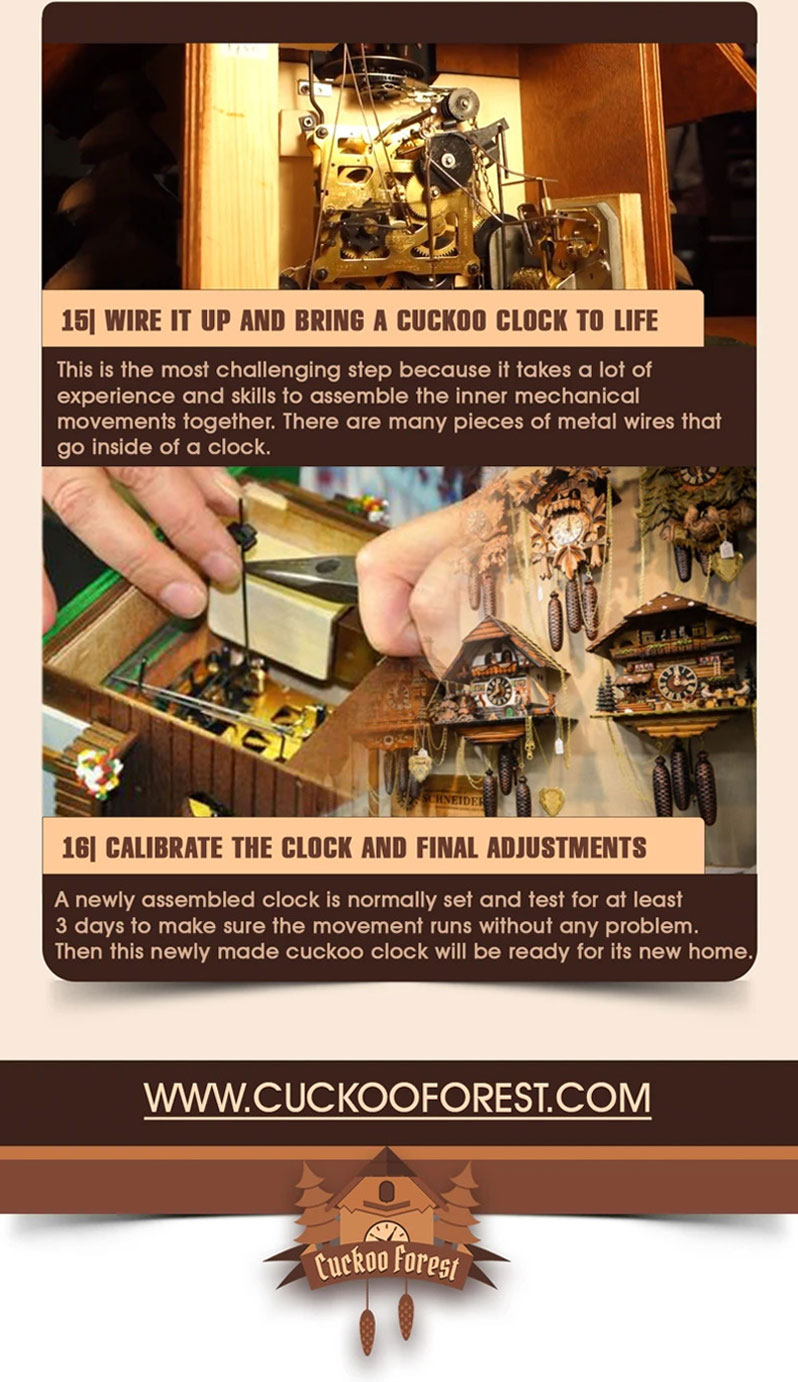
Johann B. Beha opened his first cuckoo clock workshop in 1845. That marked the beginning of the manufacturing of some of the most celebrated clocks. It is all because of the many innovations he introduced in the clock-making craft. This article explains the 16 major steps in making a cuckoo clock.

In 1854, Johann B. Beha was the first man to equip his clocks with a cuckoo mechanism. It was after this that cuckoo clocks were marketed worldwide because of their popularity.
But wait, he’s even more important that you think. Here are a just a few of his other contributions to cuckoo clocks:
- He included a spring winding device in shelf and wall cuckoo clocks
- He also adopted the English fusse system, a fact that helped expand his export market.
- In 1850, he made oil-painted picture frame cuckoo clocks for the first time.
- He developed the first cuckoo clocks incorporating moving eyes.
- He was the first to make cuckoo clocks with incorporated musical movements
Pretty incredible, right?!
The Collector’s Attention
If you interested in collecting antique Beha style clocks—keep reading!

Obviously, of all the cuckoo clocks ever made in Germany’s Black Forest region, these are some of the most loved collectables. They are great pieces of art too. You only need to have a look at his early carved pieces to appreciate this fact. On these clocks, you will find rare motifs that you haven’t seen anywhere.
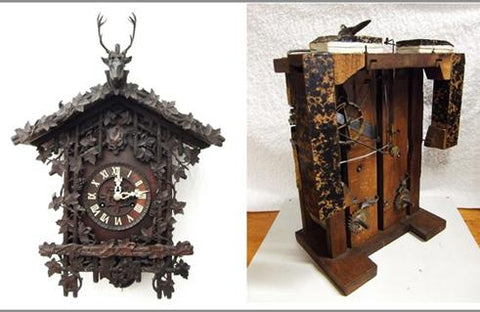
A German antique cuckoo clock is most likely made by a master clockmaker who had to handcraft every piece of work from scratch.
No machines were involved in making these clocks.
That’s why you should expect a cuckoo clock to continue working centuries after it left the workshop. A number of clock types experienced a decline in quality soon after the 18th-century.
Not so for a German antique cuckoo clock which continued to be made using traditionally accepted methods. Thus, you should be able to find these clocks as intricate and appealing as they were centuries ago.
Compared to their modern counterparts, cuckoo clocks stand out for their unique sense of style and design. These clocks are not just timepieces, but great inclusions as part of wall decorations.
It is time you got a taste of style in a cuckoo clock. Don’t forget that an antique cuckoo clock can be such a great investment. After all, more and more people are looking for that unique German antique cuckoo clock, making it a wise investment for families today.
What that means is– its value can only keep rising.
Where can you find a Beha Clock?
Finding an antique cuckoo clock for sale is not easy.
To get exactly what you want, don’t rest until you have done an online search for a cuckoo clock auction.
Since they are considered great pieces of art, cuckoo clocks are most likely to be found as part of antique art galleries.

Cuckoo clock online auction sales are not a guarantee that you will get what you are looking for. That’s because you have to make a bid in competition with other interested buyers. But that doesn’t mean that a cuckoo clock online auction is a bad idea. Who knows, it could just be here that you find what you are looking for.
Why don’t you consider looking for a cuckoo clock on eBay? Once you are on the eBay portal? all you have to do is
- Visit the Antique section.
- You will then click on ‘Antique Clocks’ tab
- Then click on the ‘Cuckoo Clocks’ tab.

The process of finding a cuckoo clock on eBay is very convenient. All you have to do is sift through the various items on offer, before picking what you want. You can use the categories list on the left of the eBay page to narrow down the search to exactly what you want.
German Clock Making Industry
Germany 19th Century, Germany started its industrial development and by 1900, the country became a world leading country in industry.
But we are not talking about heavy industries; we are talking about an old and elegant industry that started in Western Germany.

The clock making industry.
Before 1630, time was counted by an hourglass and many other primitive ways, sun as sundials. Until the first clock was made, the idea of daily time was still a bit abstract.
Once the first mechanical clocks began to make their way to the marketplace, Germany was at the forefront.
Click here to learn about how a cuckoo clock is made.
It is believed that much of clock industry and evolution was made in the Black-Forest area in southwestern Germany.
Notable Milestones
When it comes to clock making, we find cuckoo clocks the most prominent type. It has evolved throughout the years and became the most owned typed of clocks. Given its different shapes and elegant design, cuckoo clocks have become popular around the world.
But who invented the cuckoo-clock? And where?
Well, the answer is not very clear.
However, some believe that the first form of a cuckoo clock goes back to 1629.
It was made by a German nobleman named Philipp Heinhofer. The center of making cuckoo clocks was most likely in an area called the black forest in Germany.
 The very first complete cuckoo clock of the Black Forest was made by Franz Anton Ketterer, who was a skilled professional clock maker from a little village known as Schönwald. Soon after their invention, the Black-Forest clocks became very popular around the world.
Making a clock with a cuckoo bird like design to announce time was not completely originated in the Black-Forest. However, it was developed, evolved and modified there, and they still come up with new ideas, designs and technical improvements that have made the cuckoo-clock a precious piece of art all over the world especially that made in the Black-Forest.
But wait, at first, clock making wasn’t just for the masters…
Clockmaking was not monopolized by clockmakers and professionals.
As soon as it became popular, many people started making cuckoo clocks using ordinary materials and tools.
Soon after people began tinkering, many factories were built and many people mastered the art of clock-making. Soon the Black Forest was bustling with clock shops! August Schwer is one of the best cuckoo clock makers from the Black Forest region. They have won several first place prizes of Clock of The Year.
The German people took extraordinarily care and pride in hand carving the wonderous clocks.
Traditional, they would work during the cold winters and sell during the mild summers. This is the time when they could show their work as well as sell the handmade cuckoos to their customers.
With many details and beautiful carving, the cuckoo-clock was then and still is, a piece of art. The clock became in such high demand that the craft attracted many people.
Getting attention attracted invention.
The people of the Black-Forest continued to improve their methods and techniques of making cuckoo clocks. Clock-peddlers visited many regions and saw the new technologies that were used in various other regions. Somewhere around the 17th Cen, Friedrich Dilger from a small village called Urach proceeded to France and brought these new ideas as well as tools in making clocks back to Germany. Surprisingly, the famous German Cuckoo clock is now made using the same technique and mechanism that originated in the Black-Forest.
Still today, you may be surprised by the amount of clock making workshops in Germany! If you ever travel to the Black Forest region, make sure you check out the must dos for clock lovers!
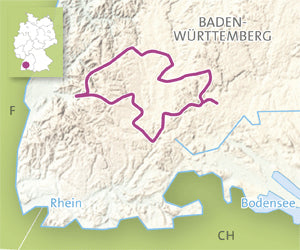
There is an area called The German-Clock Route which occupies a big portion of the Black-Forest. What you will find on this route is amazing;
- Countless clock making museums
- famous top clock makers shops, still in operation.
- It’s a MUST if you intend to visit the Black Forest
Clock Making Evolution
The German enterprise evolved over the years to include many forms of cuckoo clock. The most abundant types are shield style, chalet style, railroad house clock and the traditional style.

The two most popular cuckoo clock styles according to buyers and owners are the chalet-style cuckoo-clocks as well as the traditional style ones.
- The chalet cuckoo clock is mostly found associated with lovely animated characters, such as woodchopper, mill wheel, bell ringer, and beer stein.
- The traditional carved style generally comes associated with wildlife and natural figures all in a traditional Black Forest style.
Fortunately, you can find now many places where you can get yourself cheap cuckoo clocks, but not all of these clocks have the same quality. So, you need to keep certain tips in mind before buying a cuckoo clock.
-
- First of all, you need to know the origin of the chosen clock. If you found a German-made cuckoo clock during your shopping then you are lucky. If not, try to choose carefully.
- You can find a quality clock online. Just make sure it is an authentic German distributor.
- Cuckoo clocks do ship well, but be sure to read up on how to assemble your clock once it arrives.
- Remember, finding the proper cuckoo clock with a good price is pretty easy. BUT, getting a clock with a good quality that fits your intended budget and style could take some time.
The Cuckoo’s Cost
How much it costs depends strongly on how elaborate your cuckoo close is made.
However,
a quality clock doesn’t have to cost a fortune. Just know you are paying for what could be a family heirloom.
If you are observant and keep track of the sales, you can find a clock for under $100 on eBay or Amazon.
Just follow the guidelines we laid out above.
This kind of industry will continue to evolve and we will never stop seeing new creative ideas and new styles inspired by the modern lifestyle and mixed with the old art of clock making.
![10 Must Do’s in Black Forest Germany [Infographic] 2018](https://cuckooforest.com/wp-content/uploads/2021/01/Black_Forest_Germany_Thumbnail_39a6898b-2f8e-4b80-8647-696580957c4e_520x500.png)
by Cuckoo Forest | Feb 18, 2018 | Blog
Black Forest Germany is home to world’s leading thermal spas, picturesque towns, evergreen forests as well as the famous German cuckoo clocks.
This place is mostly associated with the fairy tales of Brothers Grimm and is ideal for family trips and honeymoons. You can definitely come here with your beloved and can spend quality time.
With its magnificent Rhine Valley and pleasant environment,
…Black Forest can be your ultimate destination in Germany.

If you are planning a trip, you may want to spend a couple of days in the Black Forest to explore its beauty. Freiburg is one of the biggest towns of this region. It has various Gothic buildings and is surrounded by vineyards.
If you’re a coo coo clock lover, then this travel guide is for you.


1
Bakeries
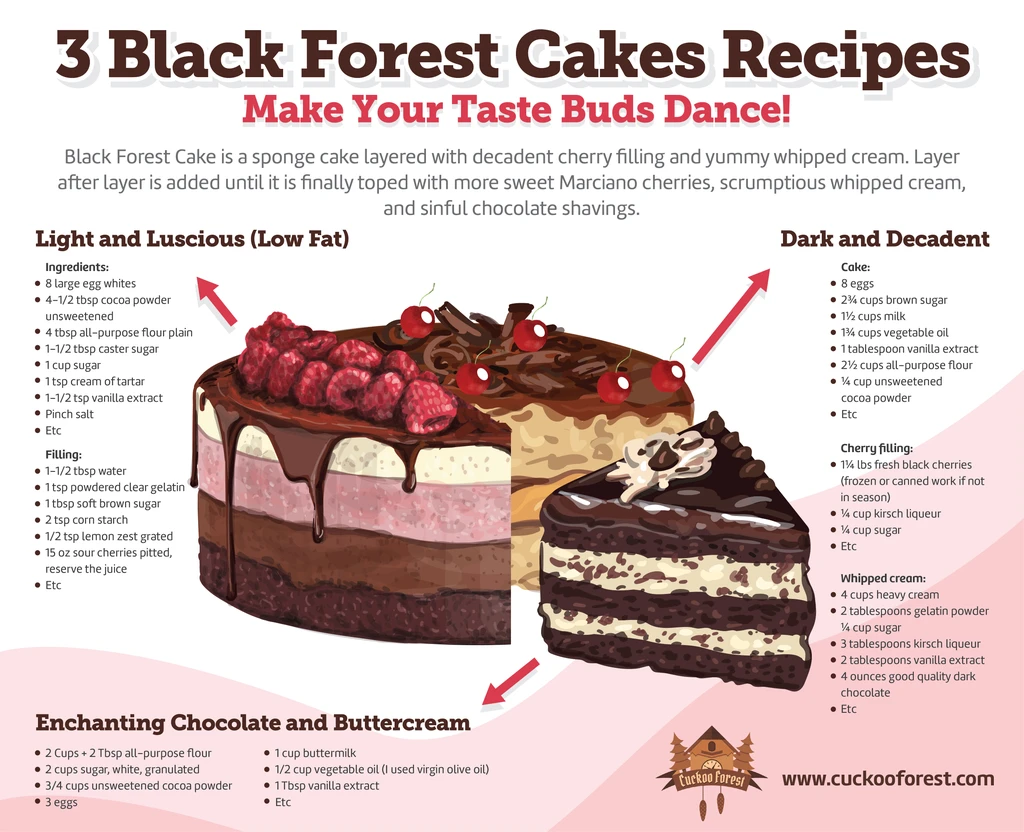
If you are a food lover and want to enjoy some pastries or cakes in Black Forest Germany, you can begin your day with a thick and mouth-watering slice of Black Forest Cake.

- This cake is traditionally made from double-distillation of Morello cherries and dark chocolate, and its taste is very amazing.
- The cake is usually served on per person basis and is topped with whipped cream and Kirsch (cherry alcohol), providing your body with instant energy.
- To tick off this most amazing thing in the Black Forest off the list, you can head to any bakery of your choice in any Black Forest town.
2
Triberg Waterfalls
Triberg Falls is another major highlight of Germany and is a landmark of Black Forest.

- Triberg with its waterfalls is a famous tourist destination, attracting lots of domestic and international tourists every year.
- For a small fee, you can enjoy the astonishing views of the waterfall from different angles.
- You can also climb a marked pathway up in the forested hills to explore its beauty closely.
- February and March are the best months to go there, but you can plan a trip according to your desire or availability as the weather remains pleasant throughout the year.
3
Schluchsee
This reservoir lake is situated in Breisgau-Hochschwarzwald, Black Forest. If you are coming from Freiburg in Breisgau, it will take you a couple of minutes to reach this place.

- The water of Schluchsee is relatively cool, which means you can plan a trip in summer too, thanks to its high elevation for making it possible.
- Schluchsee is surrounded by various walking trails in the local area. In fact, the entire length of the shoreline is ideal for walkers.
- You can consider coming here from May to October, and combine your walk with a boat trip on St. Nikolaus.
4
Karlsruhe Palace
Karlsruhe Palace was originally constructed in the 17th century and it remained the residence of grand dukes of Baden and electoral princes for nearly two centuries.

- Today, this place is home to several museums and art galleries.
- The main museum of Badisches Landesmuseum Karlsruhe is also present here, which attracts a large number of tourists from all parts of the world.
- For a small fee, you can spend hours in Karlsruhe Palace and can click some photographs with your companions.
5
Black Forest Highway
If you want to take a long drive with your beloved and have no interest in exploring any museum or art gallery, you may drive down the scenic Black Forest Highway (also known as Schwarzwaldhochstrasse and B500).

- This highway travels nearly 55 kilometers from Baden-Baden to Kinzig Valley.
- During your journey, you will get a chance to explore nature more closely.
- There are a lot of trees, plants, and green forests, making you feel happy, energetic and relaxed.
- A tiny hike from Allerheiligen Monastery will take you on a 15-minute walk to the waterfalls.
6
Mummelsee
Situated at a height of 3,390 feet in the lap of mountains, Mummelsee is one of the most popular tourist destinations in Black Forest Germany.

- A glimpse of this marvelous and pristine lake will make you crazy for the Black Forest. Even the surrounding area is quite pleasant, peaceful and charming.
- Some legends believe that this lake is inhabited by the King of the Mummelsee and a Nix.
7
Baden-Baden
Baden-Baden is a gateway to the Black Forest and has a large number of spas, attracting lots of visitors every year.
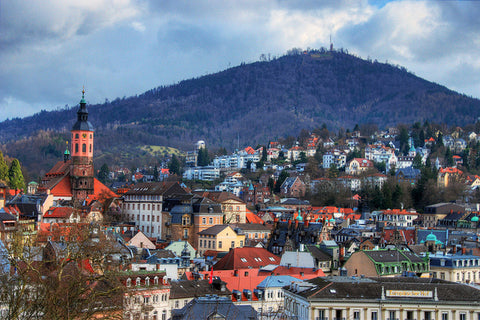
- Set in a beautiful wooded valley, Baden-Baden’s springs were first discovered by Romans.
- This place is best known for its restaurants, state-of-the-art buildings, museums, parks, and casinos.
- Merkur Mountain is one of the major attractions of Baden-Baden.
- And if you are looking for a garden of roses, then Lichtentaler Allee is a perfect place for you.
8
Blow Bubbles in Glass at Buhlbach
Have you ever heard about Buhlbach? It’s a kind of champagne bottle that is used specifically to blow bubbles.

- Situated in the county of Freudenstadt and the municipality of Baiersbronn, Buhlbach is a small town that is famous for its glass-making skills.
- Every year, the locals and foreigners are provided with a chance to blow as many bubbles as they want in a champagne bottle.
9
Enjoy A Dish of Wild Flowers and Plants
If you are tired of traditional cuisines and want some adventure or excitement, you may enjoy your dinner in the forests.

- There are various unusual things to do in Germany, but the most fantastic thing is dining out on a menu of wild plants and red roses.
- The infamous Schwarzwälder Kirschtorte (a dish with lots of cherries and black chocolate) is also served at some forest restaurants.
- You will definitely fall in love with that menu of wild plants because it is topped with salt and peppers.
10
Kreuzblume – A pocket-sized restaurant in the Black Forest
It’s not easy to spend the whole day out without eating or drinking something. Am I right? If you are looking for a budget-friendly restaurant, Kreuzblume is the perfect option for you.

- On a flower-festooned lane, Kreuzblume is a pocket-sized restaurant that has a large number of eatables to choose from.
- Each dish combines hand-picked ingredients and is present in a unique way.
- You can choose from a variety of tops, and your meal is prepared and served within a few minutes.
Finally, do not forget to visit a few cuckoo clock shops while you are in Germany. August Schwer is one of the most famous cuckoo clock makers from the Black Forest region.





![How cuckoo clocks are made? [Infographic]](https://cuckooforest.com/wp-content/uploads/2018/03/How-Cuckoo-Clock-Made-Infographic.png)